
1. Introduction
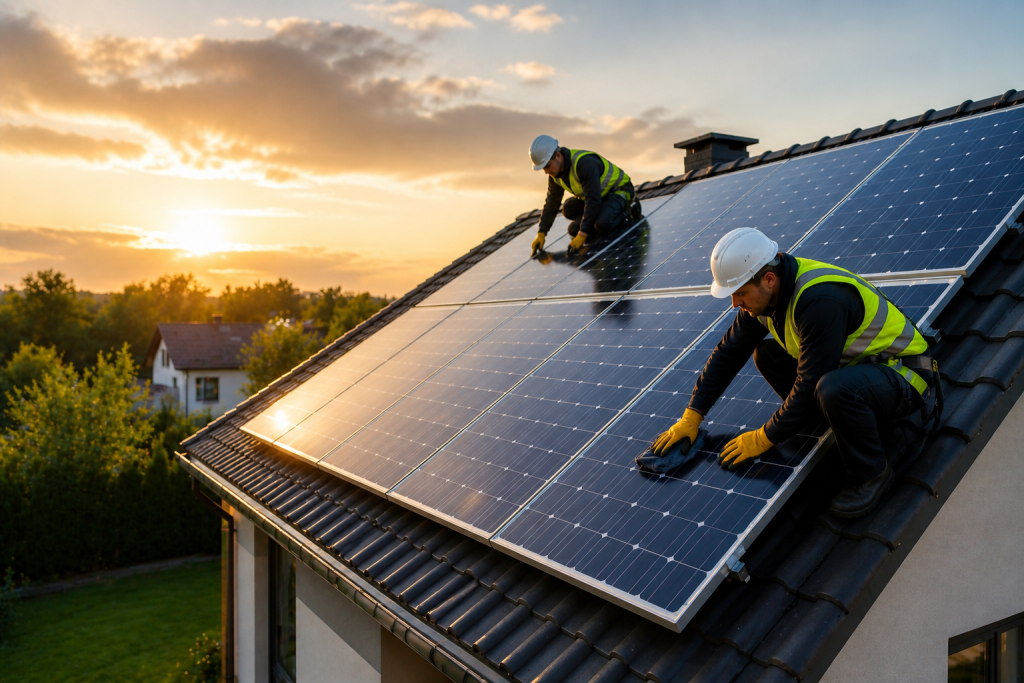
Solar panels represent one of the most significant investments a homeowner or business can make towards energy independence and sustainability. However, like all outdoor infrastructure, they are subject to the forces of nature — none more sudden or damaging than a hailstorm.
This document serves as a comprehensive educational reference covering two critical aspects of solar panel ownership:
- The physical and financial impact of hailstones of varying sizes on photovoltaic (PV) panels
- The importance of periodic cleaning and the scientifically optimal times to perform it
Why This Matters
Studies consistently show that soiled and storm-damaged solar panels operate at 15% to 35% below their rated efficiency. Over a 25-year system lifespan, unaddressed damage and neglected cleaning can cost a homeowner thousands in lost energy production and premature replacement costs.
2. Understanding Solar Panel Construction
Before understanding how hail causes damage, it is important to understand what a solar panel is made of. Modern photovoltaic panels consist of several precisely engineered layers:
| Tempered Glass (Top) | 3–4 mm thick safety glass, tested to withstand 25 mm hail at 23 m/s under IEC 61215 standards. It is the first and primary line of defence. |
| Encapsulant (EVA Film) | Ethylene-vinyl acetate film that bonds the glass to the solar cells. Moisture ingress through cracks triggers delamination and cell corrosion. |
| Solar Cells | Monocrystalline or polycrystalline silicon wafers, each 150–200 microns thick. Extremely brittle and vulnerable to pressure differentials from cracked glass above. |
| Back Sheet | Protective polymer layer. Damage here exposes live electrical circuits to moisture, creating shock and fire hazards. |
| Aluminium Frame | Structural support. Frame deformation from large hail changes panel angles and stresses glass at mounting points. |
3. Hail Impact by Stone Size
3.1 Hail Classification
| Hail Size | Diameter | Panel Impact | Efficiency Loss | Action Required |
| Pea | < 10 mm | Minimal surface abrasion, anti-reflective coating may degrade slightly over time. | 0 – 2% | Routine inspection |
| Marble | 10–19 mm | Micro-cracks in glass surface; possible hotspot formation on cells beneath impact zones. | 2 – 8% | Professional inspection |
| Golf Ball | 20–44 mm | Shattered tempered glass, broken cell strings, frame deformation, water ingress risk. | 8 – 40% | Immediate replacement |
| Hen Egg | 45–60 mm | Catastrophic glass failure, structural frame damage, complete cell destruction in impact zone. | 40 – 80% | Full system assessment |
| Baseball+ | > 60 mm | Total panel destruction, mounting system damage, inverter/wiring exposure risk. | 80 – 100% | System replacement |
3.2 Detailed Impact Analysis by Category
Pea-Sized Hail (Under 10 mm)
The most common form of hail encountered during brief summer storms. While individual strikes carry insufficient kinetic energy to shatter tempered glass, repeated storms over years cause cumulative micro-abrasion of the anti-reflective coating. This thin-film coating reduces light reflection from ~4% to under 0.1%, and its gradual erosion silently reduces panel output by 1–2% per year.
- What to check after: Surface haze or cloudiness, minor surface scratching under direct light inspection.
- Insurance implication: Rarely covered as damage is gradual and not acute.
Marble-Sized Hail (10–19 mm)
This category represents the threshold at which structural concern begins. Marble-sized hail can initiate micro-cracks — hairline fractures invisible to the naked eye — within the tempered glass and the silicon cells beneath. These cracks create ‘hotspots’: areas where electrical resistance concentrates, generating excessive heat that accelerates cell degradation.
- Efficiency impact: 2–8% immediate loss, rising to 15–20% over subsequent months as micro-cracks propagate.
- Recommended action: Electroluminescence (EL) imaging by a qualified technician to map internal cell cracks.
Golf Ball-Sized Hail (20–44 mm)
At this size, each stone carries significant kinetic energy upon impact. Tempered glass is specifically tested to resist a 25 mm stone at 23 m/s, but larger or faster stones will exceed this threshold. Impact craters, radial cracking, and star-pattern fractures are characteristic. Water infiltration through cracks is immediate, causing the EVA encapsulant to delaminate and cells to corrode.
- Key danger: Delamination may not be visible for weeks after the storm but causes irreversible efficiency decline.
- Safety alert: Cracked panels may present electrical hazards — avoid touching until inspected by a professional.
Hen Egg-Sized Hail (45–60 mm)
Events producing hail of this size are typically associated with severe thunderstorm warnings. Damage at this scale is rarely repairable. Multiple impact points will shatter large sections of glass, destroy cell strings, and bend aluminium frames out of alignment. The mounting structure itself may be compromised, creating a risk of panels detaching in subsequent wind events.
- Action: Do not attempt to operate the system. Isolate the inverter immediately and contact your installer.
- Documentation: Photograph all damage before any cleaning or touch-up for insurance claims.
Baseball-Sized and Above (Over 60 mm)
Hail at this scale causes total destruction of any solar panel it directly strikes. Such events are catastrophic for entire installations. Beyond panels, inverters, mounting hardware, and roofing materials will also sustain severe damage. Falling panel fragments themselves become a secondary hazard.
- Priority: Human safety first. Do not approach the roof until a structural safety assessment is completed.
- System replacement: Full system assessment, structural inspection, and complete reinstallation will be required.
Important: The IEC 61215 Standard
All quality solar panels sold in Pakistan and internationally must meet the IEC 61215 standard, which includes a hail impact test using 25 mm ice balls fired at 23 m/s (83 km/h). Panels passing this test offer baseline hail resistance. Always request IEC certification documents when purchasing panels. Alvi Builders installs only certified, standards-compliant panels.
4. The Importance of Periodic Cleaning
4.1 How Soiling Reduces Performance
Solar panels generate electricity through the photovoltaic effect — silicon cells converting photons of sunlight into electrical current. Any material that reduces the quantity or intensity of light reaching the cells directly reduces power output. This phenomenon is called ‘soiling loss’ and is one of the most underestimated factors in solar system performance.
Common soiling agents include:
- Dust and fine sand particles carried by wind, which form an opaque layer over weeks
- Bird droppings, which cause ‘hard shadowing’ — concentrated shadow that forces entire cell strings to reduce output
- Mud splatter from rain falling on dusty surfaces near the panels
- Pollen and organic debris during spring months
- Construction dust from nearby building activity — cement particles are particularly adhesive
- Air pollution particulates in urban environments
Performance Fact
Research from the National Renewable Energy Laboratory (NREL) demonstrates that even a thin, uniform layer of dust reduces solar panel output by 5–7%. A single bird dropping covering just 2% of a panel’s surface area can cause a disproportionate 10–30% output reduction due to partial shadowing of series-connected cells. In Pakistan’s dusty climate, uncleaned panels can lose 20–35% of their rated output within a single season.
4.2 Cleaning Frequency by Condition
There is no universal cleaning frequency that suits all situations. The optimal schedule depends on your local environment, season, and any recent weather events. The table below provides a structured reference guide:
| Season / Condition | Recommended Frequency | Reason | Best Time of Day |
| Post-Hailstorm | Immediately after storm clears | Debris, ice residue, and cracked glass must be assessed before next use | Morning – allow panels to cool first |
| Monsoon / Heavy Rain Season | Every 2–3 weeks | Rain deposits mud and particulate matter that dries onto glass surface | Early morning (before 9 AM) |
| Summer / Dry Season | Every 2–4 weeks | Dust accumulation is highest; heat causes particles to bond to glass | Evening (after 5 PM) or early morning |
| Winter / Low Sun | Every 4–6 weeks | Lower dust activity; bird droppings remain primary concern | Mid-morning when temperature rises |
| Post-Construction Nearby | Weekly until complete | Cement dust and debris cause significant soiling and potential micro-scratching | Morning or evening |
| Urban / High-Pollution Areas | Every 2 weeks | Airborne pollutants and smog coat glass reducing transmittance | Early morning |
4.3 The Optimal Time of Day to Clean
The timing of cleaning is as important as its frequency. Cleaning at the wrong time can cause thermal shock, water spotting, and even personal injury.
Why Early Morning is Generally Best
- Panels have cooled overnight from their peak operating temperatures (which can reach 60–75°C in direct summer sun)
- Morning dew naturally softens and loosens dust particles, reducing the cleaning effort required
- Water evaporates more slowly in cooler temperatures, reducing streaks and mineral deposits from hard water
- Lower ambient light means reduced reflection glare during cleaning for safe handling
Why to Avoid Midday Cleaning
- Thermal shock: Cold water on panels heated to 60–70°C can cause glass micro-cracking and accelerate degradation
- Rapid evaporation leaves mineral deposits and soap residue that reduce transmittance
- Heat stress risk to maintenance personnel working in full sun
- Wet panels reflect intensely, creating a serious glare and slip hazard on rooftops
Evening Cleaning Considerations
- Acceptable during summer when morning cleaning is impractical due to schedules
- Ensure panels are completely dry before nightfall to prevent moisture retention and potential electrical issues
- Avoid cleaning immediately after sunset when overnight dew may re-deposit particles on wet glass
4.4 Correct Cleaning Method
Using the wrong cleaning technique can cause as much damage as the soiling itself. The following guidelines reflect best practices for PV panel maintenance:
| DO | DO NOT |
| ✓ Use lukewarm or cool clean water | ✗ Use hot or boiling water (thermal shock) |
| ✓ Use a soft microfiber cloth or squeegee | ✗ Use abrasive scrubbing pads or steel wool |
| ✓ Use manufacturer-approved mild soap if needed | ✗ Use harsh detergents, solvents, or bleach |
| ✓ Rinse thoroughly to remove all soap residue | ✗ Leave soap or residue on glass surface |
| ✓ Work from the top of the panel downward | ✗ Step directly on panels or mounting rails |
| ✓ Inspect for cracks and damage while cleaning | ✗ Pressure-wash directly at panel edges or junction boxes |
| ✓ Wear non-slip footwear and use a safety harness | ✗ Clean panels while they are at peak operating temperature |
5. Post-Hailstorm Response Protocol
When a hailstorm strikes, a calm and methodical response protects both your safety and your investment. Follow this step-by-step protocol:
- Ensure Personal Safety First — Do not go onto the roof during or immediately after a storm. Wait until weather has fully cleared and surfaces are dry.
- Isolate the System — Switch off the solar inverter and, if accessible, the DC isolator switch. Do not operate a potentially damaged system.
- Visual Ground-Level Inspection — Using binoculars if available, survey panels from ground level for visible glass damage before ascending.
- Photographic Documentation — Photograph all visible damage from multiple angles for insurance and warranty claims.
- Contact Your Installer — Call Alvi Builders for a professional post-storm inspection. We will assess glass integrity, cell condition, electrical connections, and mounting structures.
- Professional Cleaning — Once cleared as safe, arrange a professional clean to remove hail residue, ice fragments, and debris before restarting the system.
- Monitor Output — After restart, compare your inverter’s output data against pre-storm benchmarks. A drop greater than 5% warrants further investigation.
6. Preventive & Protective Measures
While no measure can guarantee complete protection against severe hail, several strategies can meaningfully reduce risk and repair costs:
- Panel Tilt Angle Optimisation: Panels tilted at 35° or more shed hail more effectively than flat-mounted arrays. At higher angles, glancing strikes cause significantly less damage than direct impacts.
- Hail Guards / Protective Netting: Wire mesh systems mounted above panels provide a physical buffer. These must be installed professionally to avoid shading losses exceeding the protection benefit.
- Monitoring Systems: Real-time inverter monitoring (available through smart inverters) alerts owners to immediate output drops following storms, enabling faster response.
- Insurance Coverage: Ensure your home or commercial property insurance explicitly covers solar panel hail damage. Request that your insurer reference the IEC 61215 hail standard in your policy.
- Regular Maintenance Contracts: Annual maintenance agreements with your installer ensure panels are inspected twice yearly, catching micro-damage before it becomes catastrophic.
-
Protect Your Investment Maximise Your Returns.
Solar panels are built to last 25–30 years, but only with the care they deserve. Hailstorm preparedness and a consistent cleaning schedule are not optional maintenance tasks — they are fundamental to realising the full financial and environmental return on your solar investment.
Alvi Builders — Building the future where innovation meets sustainability.